Phygital Experiences: Where Online and Offline Converge
Phygital experiences fuse screens and spaces, turning every touchpoint into a measurable, human journey. Here's how brands can do it right.
Redefining Presence
Phygital experiences blend the immediacy of physical touchpoints with the intelligence of digital systems, creating a new standard for brand presence. Instead of treating offline and online as separate lanes, phygital design favors continuity across contexts, so a journey feels like one narrative rather than a set of disconnected errands. This trend answers modern expectations for convenience, control, and connection, where people want to explore, evaluate, and act with minimal friction, whichever channel they choose. The physical world delivers sensory credibility and human nuance, while digital layers add personalization, interactivity, and scalability. Together, they enable richer storytelling, faster problem solving, and more confident decisions. Think of a store that behaves like a smart interface or a website that anticipates in-store needs. The emphasis shifts from transactions to experiences that compound over time, carrying forward context, preferences, and progress. When brands choreograph these elements with clarity, they earn trust, reduce decision fatigue, and differentiate on value rather than sheer promotion.
Seamless Journeys
The heart of phygital innovation is a seamless journey that recognizes people across touchpoints and honors their momentum. That means a single customer view, unified identity, and synchronized real-time inventory so discovery, purchase, and support flow without detours. A shopper may scan a product to unlock rich content, place items in a mobile cart, and complete a frictionless checkout at a kiosk or on a phone. Click and collect, curbside handoff, and flexible returns stitch convenience to reliability. Service teams see the same context, making problem resolution swift and human. Every handoff is designed to feel intentional, from micro-moments like fitting-room recommendations to post-purchase tips that extend product value. Wayfinding, notifications, and context-aware prompts reduce cognitive load, while thoughtful fail-safes ensure progress is never lost. The result is a journey that mirrors how people actually decide, making the brand a helpful companion rather than a gatekeeper, and setting a durable trend for omnichannel excellence.
Data-Driven Personalization
Phygital experiences thrive on respectful, data-driven personalization powered by first-party data, zero-party data, and contextual signals. Sensors, NFC, QR codes, and computer vision can illuminate intent, but the winning approach leads with consent, transparency, and privacy by design. Instead of blasting generic messages, brands tailor content, timing, and format to the moment: dynamic signage that adapts to inventory, mobile prompts aligned to aisle location, or curated bundles reflective of past behavior. The aim is relevance without intrusion, where controls are visible and preferences are easy to adjust. Predictive models help with staffing, replenishment, and layout, while contextual personalization boosts discovery and satisfaction. When customers contribute preferences, they should immediately see value in clearer guidance, faster checkout, or better support. A culture of data stewardship—minimization, security, and clear governance—builds confidence. Personalization then stops feeling like surveillance and becomes a service, raising the standard for phygital trust, utility, and long-term loyalty.
Retail Reimagined
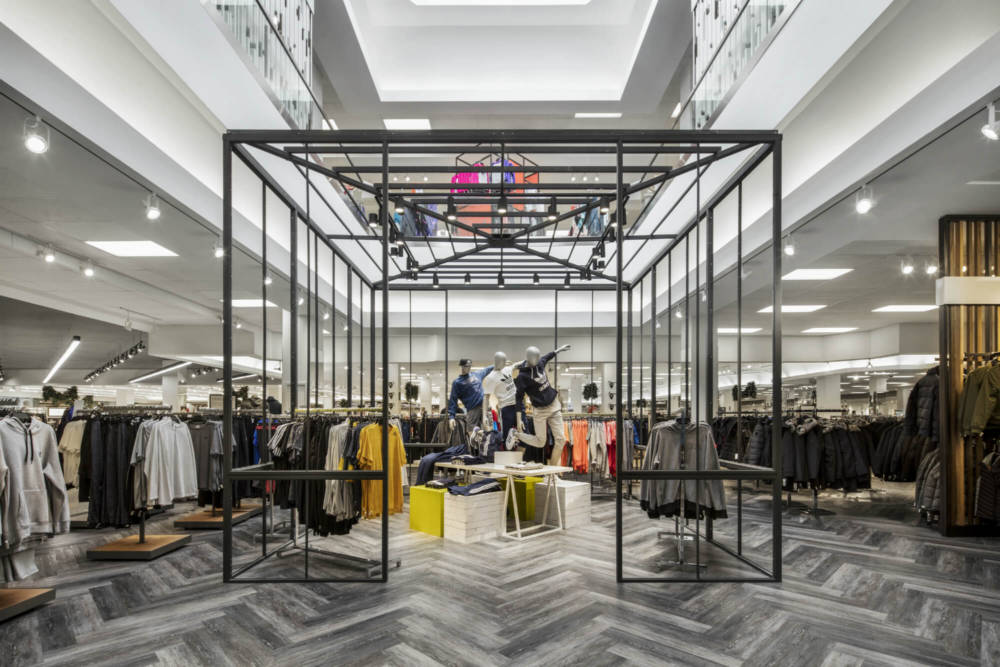
In retail, the phygital trend reframes stores as experience hubs and media channels rather than mere inventory depots. Augmented reality and smart mirrors invite virtual try-on, while endless aisle tools unlock options beyond shelf space. Associates equipped with clienteling apps orchestrate remote recommendations, in-store styling, and follow-up care, transforming service from reactive to proactive. Gamified moments and phygital loyalty mechanics reward exploration—scan to learn, share to earn, return to unlock—making engagement cumulative and fun. Mobile apps blur walls by reserving items, scheduling services, and bridging click-and-collect with home delivery. Pop-ups and modular layouts keep storytelling fresh, while materials, lighting, and sound design amplify digital layers without overwhelming the senses. Crucially, accessibility and wayfinding ensure every interaction is inclusive. When done well, the store becomes a stage for discovery, a studio for content, and a community node—all informed by data and powered by hospitality—raising conversion while deepening brand affinity.
Events and Community
Phygital is transforming events into hybrid communities that breathe before, during, and after the main moment. Live venues add digital layers—second-screen Q&A, synchronized polls, AR overlays, and geofenced rewards—so attendees can interact without missing the action. Remote participants engage through curated streams, breakout chats, and digital badges that mark milestones and unlock perks. On-site, scavenger hunts and contextual content nudge exploration, while wayfinding, safety updates, and real-time agendas remove uncertainty. Post-event hubs harvest momentum with highlights, workshops, and challenges that extend learning and networking. Encouraging UGC and lightweight co-creation gives people a stake in the narrative, building social proof and recurring attendance. Sponsorships evolve from logos to utilities—charging, hydration, navigation—delivering tangible value linked to measurable outcomes. The result is not just a bigger audience but a tighter fabric of belonging, where participants grow from spectators to collaborators, and the event becomes an engine for ongoing community and brand relevance.
Design and Technology
Winning phygital experiences rely on intentional experience design backed by robust technology orchestration. Start with principles: clarity, accessibility, speed, and redundancy. Design for low latency, intuitive gestures, clear status, and graceful failure. Hardware choices—kiosks, sensors, wearables—should serve the story, not distract from it. Standards such as NFC, BLE, Web-based AR, and progressive web apps reduce friction and keep experiences updatable. On the back end, APIs, event-driven architecture, and edge computing synchronize identity, inventory, and content while protecting responsiveness. Security and privacy guardrails are nonnegotiable, as is the ability to operate offline when networks are unreliable. Brand voice guides microcopy, motion, and haptics, so physical cues and digital prompts feel coherent. Cross-functional teams prototype early, test in real environments, and refine based on signals, not assumptions. With the right stack and standards, phygital becomes a repeatable capability, not a one-off installation.
Measuring Impact
The trend toward phygital maturity depends on clear measurement that ties experience quality to business results. Combine footfall, dwell time, and heatmaps with conversion, AOV, and LTV to see how interactions influence outcomes. Layer in sentiment, NPS, and qualitative feedback to interpret why moments work or stall. Use incrementality testing, control groups, and uplift modeling to separate novelty from true impact. Track operational metrics—pick rates, queue times, return friction—to expose bottlenecks hidden behind averages. Build dashboards that reflect the journey, not just channels, and align teams on a shared north star. Start with focused pilots, define success up front, and iterate toward scale as signals strengthen. Governance ensures data quality, privacy, and cross-team clarity, while playbooks codify learnings for replication. When measurement is embedded from the start, phygital shifts from experiment to engine, reliably compounding ROI and deepening the resilience of the customer relationship.